
Summary: The government has extended the deadline for filing appeals and applications before the GST Appellate Tribunal (GSTAT) to 31 July 2026. This extension applies mainly to appeals where the order being challenged was communicated before 1 May 2026, and to applications relating to orders passed before 1 February 2026. If you have a pending GST dispute covered by these dates, this is your window to file. Missing it could mean losing your right to appeal, so acting quickly with help from a chartered accountants firm is wise.
If you have an unresolved GST dispute, there is important news: the deadline to appeal before the GST Appellate Tribunal has been extended to 31 July 2026.
This extension is a genuine opportunity, but it comes with conditions on which cases qualify. Understanding whether your case is covered, and acting in time, is essential.
This guide explains the extension, who should file, and how to go about it.
What is the GST appeal deadline extension?
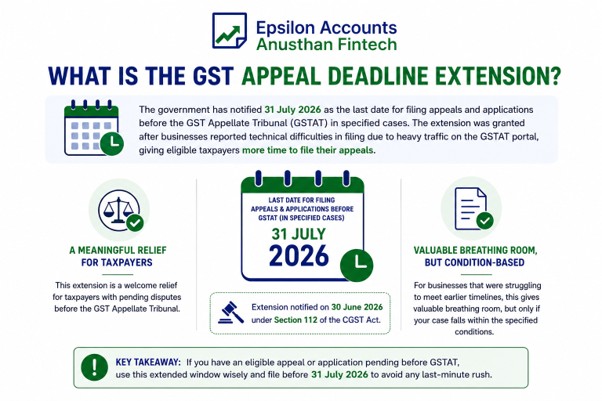
The government has notified 31 July 2026 as the last date for filing appeals and applications before the GST Appellate Tribunal (GSTAT) in specified cases. The extension was granted after businesses reported technical difficulties in filing due to heavy traffic on the GSTAT portal, giving eligible taxpayers more time to file their appeals.
This is a meaningful relief for taxpayers with pending disputes.
The extension was notified on 30 June 2026 under Section 112 of the CGST Act, setting 31 July 2026 as the deadline for eligible appeals and applications before the tribunal.
For businesses that were struggling to meet earlier timelines, this gives valuable breathing room, but only if your case falls within the specified conditions.
Who is eligible to file under the extended deadline?
The extended 31 July 2026 deadline applies mainly to appeals where the order being challenged was communicated to you before 1 May 2026, and to applications relating to orders passed before 1 February 2026. If your order falls after these dates, the normal statutory timelines apply instead of the extension.
Here is a clear breakdown of eligibility:
| Type | Condition for the extension | If not eligible |
| Appeals | Order communicated before 1 May 2026 | File within 3 months of the order |
| Applications | Order passed before 1 February 2026 | File within 6 months of the order |
So the extension is not a blanket one. It is designed for orders communicated or passed before those specific cut-off dates. For newer orders, the standard timelines under Section 112 continue to apply.
Checking exactly when your order was communicated or passed is the first step in knowing whether you qualify.
Who should consider filing an appeal?
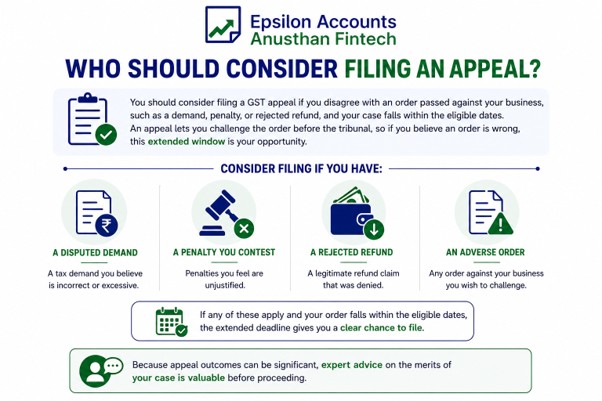
You should consider filing a GST appeal if you disagree with an order passed against your business, such as a demand, penalty, or rejected refund, and your case falls within the eligible dates. An appeal lets you challenge the order before the tribunal, so if you believe an order is wrong, this extended window is your opportunity.
Consider filing if you have:
- A disputed demand: a tax demand you believe is incorrect or excessive.
- A penalty you contest: penalties you feel are unjustified.
- A rejected refund: a legitimate refund claim that was denied.
- An adverse order: any order against your business you wish to challenge.
If any of these apply and your order falls within the eligible dates, the extended deadline gives you a clear chance to file. Because appeal outcomes can be significant, expert advice on the merits of your case is valuable before proceeding.
How do you file a GST appeal before GSTAT?
You file a GST appeal before GSTAT by preparing the required documents, submitting the appeal on the GSTAT portal within the deadline, and paying the mandatory pre-deposit. The process involves specific forms, supporting evidence, and grounds of appeal, so professional help ensures it is filed correctly and on time.
The broad steps are:
- Review the order: confirm the order details and your eligibility to appeal.
- Prepare grounds: set out clearly why you are challenging the order.
- Gather documents: compile the order, evidence, and supporting records.
- Pay the pre-deposit: make the mandatory pre-deposit required to appeal.
- File on the portal: submit the appeal on the GSTAT portal before the deadline.
Given the technical nature and the strict deadline, many businesses seek professional support. A ca company in Mumbai, top chartered accountant firms in Thane, and income tax return filing services in Thane often assist with GST appeals, ensuring the paperwork and pre-deposit are handled correctly.
Why act quickly before the deadline?
You should act quickly because the deadline is fixed at 31 July 2026 and the portal has already experienced heavy traffic. Leaving your appeal to the last minute risks technical delays or missing the deadline entirely, which could mean losing your right to challenge the order, so early filing is strongly advised.
The urgency is practical, not just procedural.
The extension itself was granted because of portal congestion, so a rush of last-minute filings near the deadline is likely. Filing early avoids technical hold-ups and the risk of missing the cut-off.
Missing the deadline can be costly, potentially closing off your right to appeal an unfavourable order. This is why reviewing your eligibility and preparing your appeal well before 31 July 2026 is the sensible course.
Frequently asked questions
What is the new GST appeal deadline? The deadline for filing appeals and applications before the GST Appellate Tribunal (GSTAT) in specified cases has been extended to 31 July 2026. It applies mainly to appeals where the order was communicated before 1 May 2026, and applications for orders passed before 1 February 2026.
Does the extension apply to all GST orders? No. The extension mainly covers appeals where the order was communicated before 1 May 2026 and applications for orders passed before 1 February 2026. For orders after these dates, the normal statutory timelines under Section 112 of the CGST Act apply instead.
What happens if I miss the appeal deadline? If you miss the deadline and your case was covered by the extension, you may lose your right to appeal that order before the tribunal. This makes timely filing important, so review your eligibility and file well before 31 July 2026 to protect your rights.
Is a pre-deposit required to file a GST appeal? Yes, filing an appeal before the GST Appellate Tribunal requires a mandatory pre-deposit of a portion of the disputed amount. The exact amount depends on the case, so it is important to calculate and arrange this correctly as part of preparing your appeal.
Should I use a CA firm to file my GST appeal? For most businesses, yes. GST appeals involve specific forms, grounds, evidence, and a pre-deposit, all within a strict deadline. A CA firm ensures your appeal is prepared correctly, filed on time, and gives your case the best chance, especially given the portal congestion.
Why choose Epsilon for GST appeals
Because GST appeals involve strict deadlines and technical requirements, expert support is invaluable, and this is where Epsilon helps businesses across Thane and Mumbai.
The firm assists with the full GST appeal process, from reviewing your eligibility and preparing grounds to arranging the pre-deposit and filing on the GSTAT portal before the deadline. Businesses receive clear guidance on the merits of their case and confident handling of the paperwork.
That expert, deadline-focused approach is what makes the firm a trusted name for GST and tax matters in Thane and Mumbai.
The extension of the GST appeal deadline to 31 July 2026 is a genuine opportunity for businesses with eligible pending disputes, but the window is closing fast. Checking whether your case qualifies and filing early is the safest way to protect your right to appeal. To review your eligibility and file your GST appeal correctly, get in touch with our team today.